
Sitemap
A list of all the posts and pages found on the site. For you robots out there, there is an XML version available for digesting as well.
Pages
Posts
Travel and Travel Plan
Published:
Here I will list the renewed travel plan from time to time.
portfolio
Superradiant Black Hole with Binary Companion
The LIGO–Virgo–KAGRA (LVK) Collaboration has provided groundbreaking insights into black holes (BHs), making it possible to detect the inspiral and merger phases of binary black hole (BBH) systems through gravitational waves (GWs). This breakthrough opens up the possibility of using black holes as probes to detect particles beyond the Standard Model (BSM). Among those BSM particles, my research primarily focuses on the ultralight boson (ULB), such as the axion, which is a promising candidate for dark matter (DM). ULBs can affect the dynamics of BBH systems through several channels, depending on how a condensed ULB environment forms around the BHs, and I am particularly interested in a mechanism known as black hole superradiance. Through this process, ULBs can extract energy and angular momentum from BHs, forming dense bosonic clouds around them. This structure is similar to the electron orbiting a nucleus in a hydrogen atom, which is often referred to as a gravitational atom (GA). Superradiance can produce observable signatures in both the electromagnetic and GW spectra. How the dense ULB cloud in a GA influences the orbital motion of a BBH, how this affects the resulting GW signals, and how information about the ULB can be extracted from the BBH orbital dynamics were discussed in my previous studies: 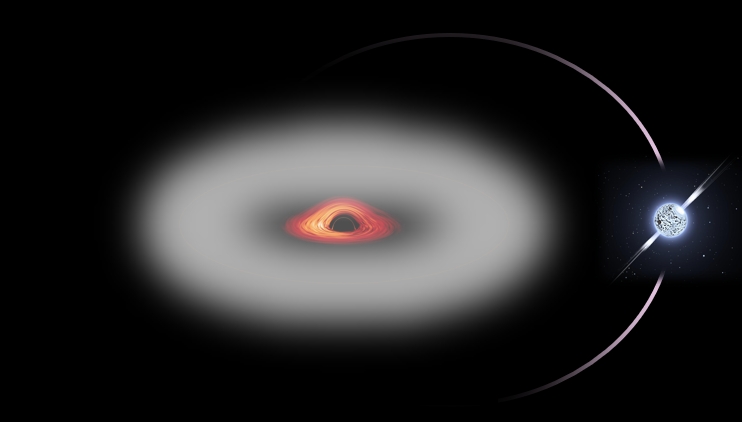
Induced Gravitational Wave
Primordial fluctuations, such as scalar and tensor fluctuations, are of great importance in the current study of modern cosmology. Large density perturbations with short wavelengths can lead to the formation of primordial black holes (PBHs) which has aroused significant interest recently, as they can be considered as promising dark matter candidates. Meanwhile, it can also induce long-wavelength GWs inside the horizon or tensor modes outside the horizon, which can be possibly observed by the cosmic microwave background (CMB). The observable of this GW is its energy density, which is proportional to its power spectrum. Previous studies of its power spectrum have primarily focused on the secondary scalar-induced gravitational wave… 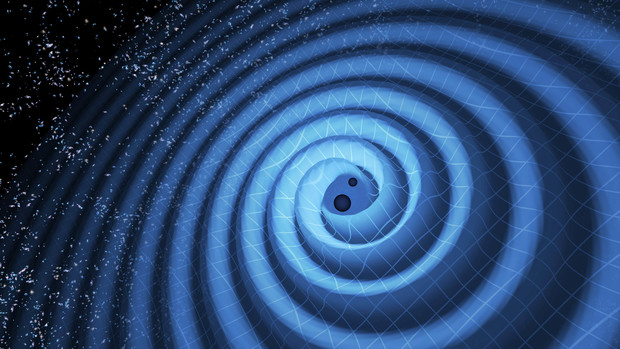
publications
Paper Title Number 1
Published in Journal 1, 2009
This paper is about the number 1. The number 2 is left for future work.
Recommended citation: Your Name, You. (2009). "Paper Title Number 1." Journal 1. 1(1).
Download Paper | Download Slides | Download Bibtex
Paper Title Number 2
Published in Journal 1, 2010
This paper is about the number 2. The number 3 is left for future work.
Recommended citation: Your Name, You. (2010). "Paper Title Number 2." Journal 1. 1(2).
Download Paper | Download Slides
Paper Title Number 3
Published in Journal 1, 2015
This paper is about the number 3. The number 4 is left for future work.
Recommended citation: Your Name, You. (2015). "Paper Title Number 3." Journal 1. 1(3).
Download Paper | Download Slides
Paper Title Number 4
Published in GitHub Journal of Bugs, 2024
This paper is about fixing template issue #693.
Recommended citation: Your Name, You. (2024). "Paper Title Number 3." GitHub Journal of Bugs. 1(3).
Download Paper
talks
Talk 1 on Relevant Topic in Your Field
Published:
This is a description of your talk, which is a markdown file that can be all markdown-ified like any other post. Yay markdown!
Conference Proceeding talk 3 on Relevant Topic in Your Field
Published:
This is a description of your conference proceedings talk, note the different field in type. You can put anything in this field.
teaching
Black Hole Superradiance
Worshop, University 1, Department , 2014
This is a description of a teaching experience. You can use markdown like any other post.
Teaching experience 2
Workshop, University 1, Department, 2015
This is a description of a teaching experience. You can use markdown like any other post.