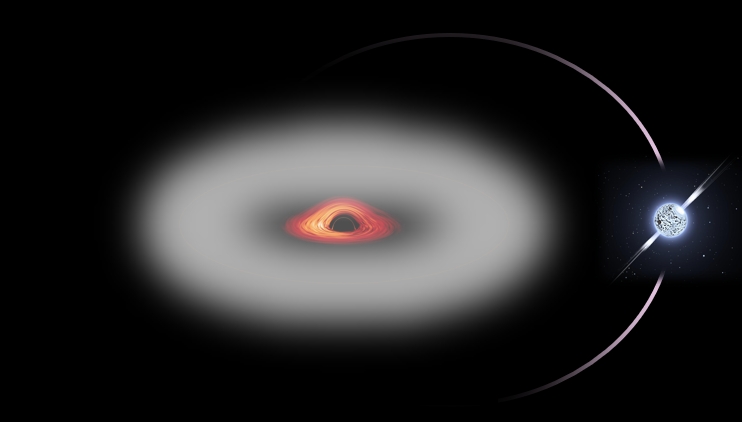
Superradiant Black Hole with Binary Companion
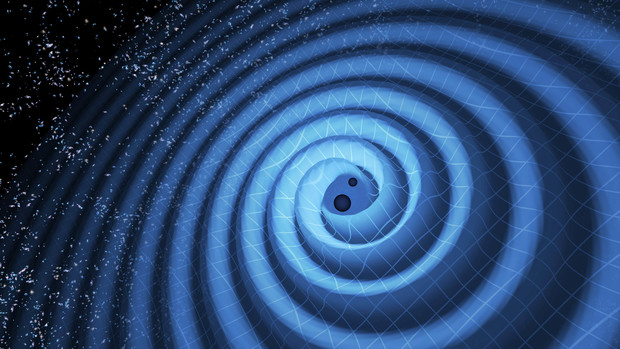
The LIGO–Virgo–KAGRA (LVK) Collaboration has provided groundbreaking insights into black holes (BHs), making it possible to detect the inspiral and merger phases of binary black hole (BBH) systems through gravitational waves (GWs). This breakthrough opens up the possibility of using black holes as probes to detect particles beyond the Standard Model (BSM). Among those BSM particles, my research primarily focuses on the ultralight boson (ULB), such as the axion, which is a promising candidate for dark matter (DM). ULBs can affect the dynamics of BBH systems through several channels, depending on how a condensed ULB environment forms around the BHs, and I am particularly interested in a mechanism known as black hole superradiance. Through this process, ULBs can extract energy and angular momentum from BHs, forming dense bosonic clouds around them. This structure is similar to the electron orbiting a nucleus in a hydrogen atom, which is often referred to as a gravitational atom (GA). Superradiance can produce observable signatures in both the electromagnetic and GW spectra. How the dense ULB cloud in a GA influences the orbital motion of a BBH, how this affects the resulting GW signals, and how information about the ULB can be extracted from the BBH orbital dynamics were discussed in my previous studies: